
What Kind of Pork Do Filipino Consumers Really Want?
Why Every Hog Raiser Should Start Thinking Like a Customer
Many hog raisers judge success by the number of pigs sold, the average daily gain, or how quickly pigs reach market weight. These are important indicators of a well-managed farm—but they tell only part of the story.
The real measure of success begins much later, when a customer stands in front of a butcher’s display or supermarket meat counter and decides which piece of pork to buy.
Every day, millions of Filipinos make that decision. Some are mothers planning dinner for their families. Others are restaurant owners looking for consistent quality. Meat vendors search for cuts that sell quickly, while lechon makers carefully inspect skin thickness and fat cover before choosing a pig.
Although each buyer has different needs, they all ask the same basic question:
“Is this the kind of pork my customers will enjoy eating?”
For hog raisers, this question is even more important:
“Am I producing the kind of pig that the market actually wants?”
Many farms focus on producing the biggest pig possible. Others aim for the leanest carcass. Some believe that thicker fat means better pork, while others think consumers want almost no fat at all.
The truth is more interesting—and far more profitable.
There is no single “perfect pig.” The ideal pig depends on the market being served. However, one fact remains consistent throughout the Philippine pork industry:
Consumers are willing to pay more for pork that delivers an enjoyable eating experience.
That eating experience depends on several characteristics:
- tenderness;
- juiciness;
- flavor;
- freshness;
- appearance;
- and suitability for the intended dish.
Understanding these characteristics allows farmers to produce pigs that not only grow efficiently but also satisfy consumers and create repeat demand.
Pork Quality Begins Long Before Slaughter
Many people assume pork quality is determined only after slaughter. In reality, the quality of pork begins months earlier, when the pig is still growing on the farm.
Every management decision influences the final product:
- the breed selected;
- the quality of piglets;
- nutrition;
- clean water;
- housing;
- ventilation;
- health management;
- biosecurity;
- stress reduction;
- transport;
- slaughter practices.
Each factor contributes to the meat that eventually reaches a family’s dining table.
A pig with excellent genetics cannot reach its full potential if it is poorly fed.
Likewise, a pig that receives excellent nutrition can still produce poor-quality pork if it experiences severe stress during transport or rough handling before slaughter.
Premium pork is therefore the result of good genetics, balanced nutrition, excellent management and proper animal welfare working together.
What Does “Good Pork” Really Mean?
Ask ten consumers to describe high-quality pork, and you may receive ten different answers.
Some will say:
“The meat should be lean.”
Others will answer:
“The meat should have enough fat because that’s where the flavor comes from.”
Restaurant chefs may focus on consistency.
Lechon makers often examine the skin.
Barbecue vendors may prioritize the belly.
Health-conscious families often choose loin or pigue.
Despite these differences, meat scientists generally evaluate pork using several important characteristics.
1. Appearance
Consumers buy with their eyes before they buy with their wallets.
Fresh pork should appear:
- clean;
- bright;
- slightly moist but not watery;
- pink to reddish-pink in color;
- free from excessive bruising or discoloration.
Pale, watery meat may indicate quality problems, while extremely dark meat may result from stress before slaughter.
Appearance strongly influences purchasing decisions, especially in wet markets where customers can compare many carcasses side by side.
2. Lean Meat
Lean meat provides the protein consumers are looking for.
Cuts such as pigue, loin and pork chop contain a high proportion of muscle.
Lean pork is especially popular among:
- health-conscious families;
- supermarkets;
- institutional buyers;
- restaurants serving grilled or fried pork;
- consumers who trim visible fat before cooking.
However, lean meat alone does not determine eating quality.
3. Fat
Fat often receives unfair criticism.
Many consumers say they prefer lean meat, yet some of the Philippines’ most popular dishes rely heavily on well-balanced fat.
Think about:
- grilled liempo;
- lechon kawali;
- bagnet;
- crispy pata;
- humba;
- bacon;
- pork barbecue.
These dishes would lose much of their flavor if all the fat were removed.
Fat contributes:
- flavor;
- juiciness;
- tenderness;
- aroma;
- mouthfeel;
- cooking performance.
The goal is not excessive fat but the right amount of fat in the right places.
4. Marbling
Marbling refers to tiny streaks of fat distributed within the muscle.
Many consumers confuse marbling with thick backfat.
They are not the same.
A pig may have:
- excessive backfat but little marbling; or
- moderate external fat with excellent marbling.
Marbling improves:
- tenderness;
- juiciness;
- flavor;
- eating satisfaction.
This is one reason why some pork simply tastes better than others, even when both come from pigs of similar weight.
5. Firm Fat
Not all fat is created equal.
Firm white fat is generally preferred because it:
- slices cleanly;
- cooks well;
- produces attractive liempo;
- performs better during processing.
Soft, oily fat may result from poor nutrition, excessive use of certain feed ingredients, or improper finishing diets.
Consumers may not know why one belly looks more appealing than another, but they often recognize quality instinctively.
Did You Know?
A pig that grows quickly is not automatically the most profitable pig.
The most profitable pig is the one that produces the type of carcass consumers are willing to pay the highest price for while remaining economical to produce.
That means understanding the market—not simply producing heavier pigs.
Why Filipino Consumers Are Different
Every country has its own food culture, and that culture shapes the kind of pork people prefer.
In some Western countries, consumers often buy boneless pork chops, tenderloin, or lean loin roasts.
In South Korea, pork belly is famously popular for samgyeopsal.
In Japan, shoppers place great value on tenderness, marbling, and consistent presentation.
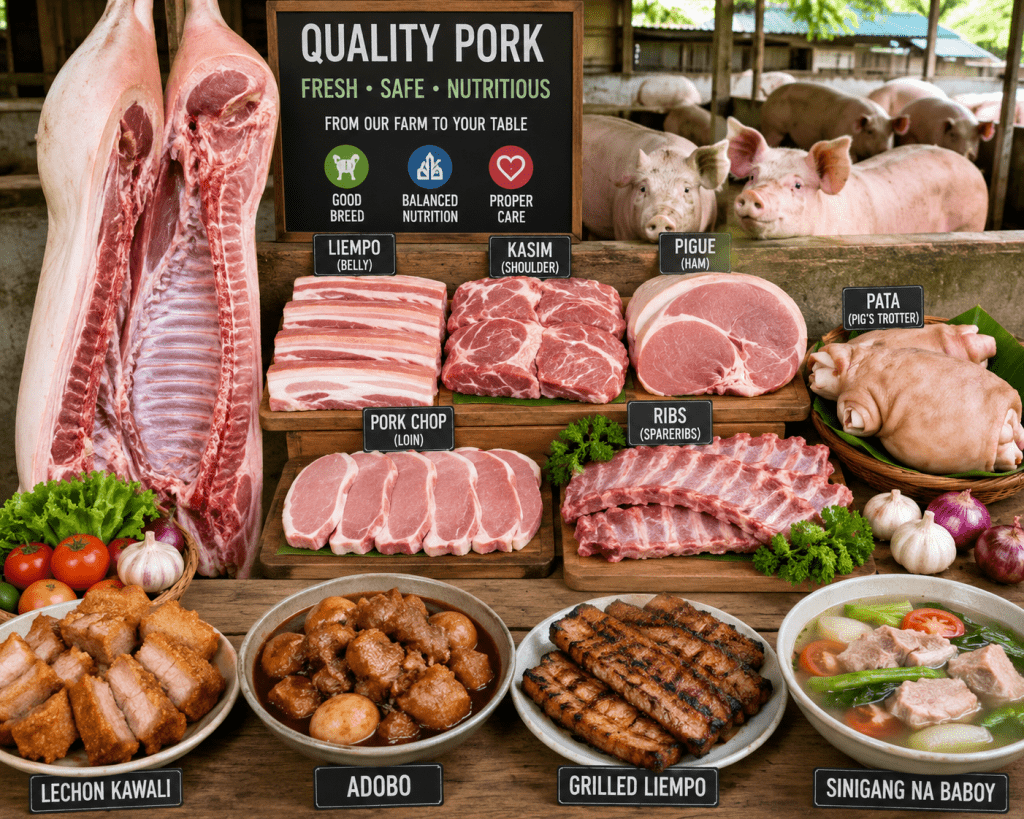
The Philippines is unique because our cuisine makes excellent use of almost every part of the pig.
Liempo becomes lechon kawali.
Kasim becomes adobo or menudo.
Pigue is turned into ham, tocino, or embutido.
Pata becomes crispy pata.
Ribs become barbecue or sinigang.
Head, ears, and cheeks become sisig.
Even many organs are transformed into beloved Filipino dishes.
This broad culinary tradition means the Philippine pork industry must produce balanced carcasses rather than focusing exclusively on either lean meat or fat.
Continue Reading
In the next article of the UBTAC Pork Excellence Series:
Fatty or Lean? What Type of Pork Should Philippine Hog Raisers Produce?