
Fatty or Lean? What Type of Pork Should Philippine Hog Raisers Produce?
The Philippine Pork Excellence Series
Published by UBTAC
Science-Based Knowledge for Better Hog Farming
Supported by Purina® by Cargill
The Question Every Hog Farmer Eventually Asks
Walk through any livestock auction or spend time talking with hog raisers, and you’ll eventually hear the same debate:
“Consumers want lean meat nowadays.”
Another farmer quickly replies:
“No, customers still buy liempo first.”
So who is right?
Surprisingly, both are—at least partly.
The real question isn’t whether consumers want fatty pork or lean pork. The better question is:
What balance of lean meat and fat creates the highest value for today’s Philippine market?
The answer is important because it affects breeding decisions, feeding programs, marketing weight, and ultimately the profitability of every pig raised.
Why Fat Has Been Misunderstood
For many years, fat developed a negative reputation because of changing dietary trends. Some consumers began looking for leaner cuts, believing that visible fat alone determined whether pork was healthy.
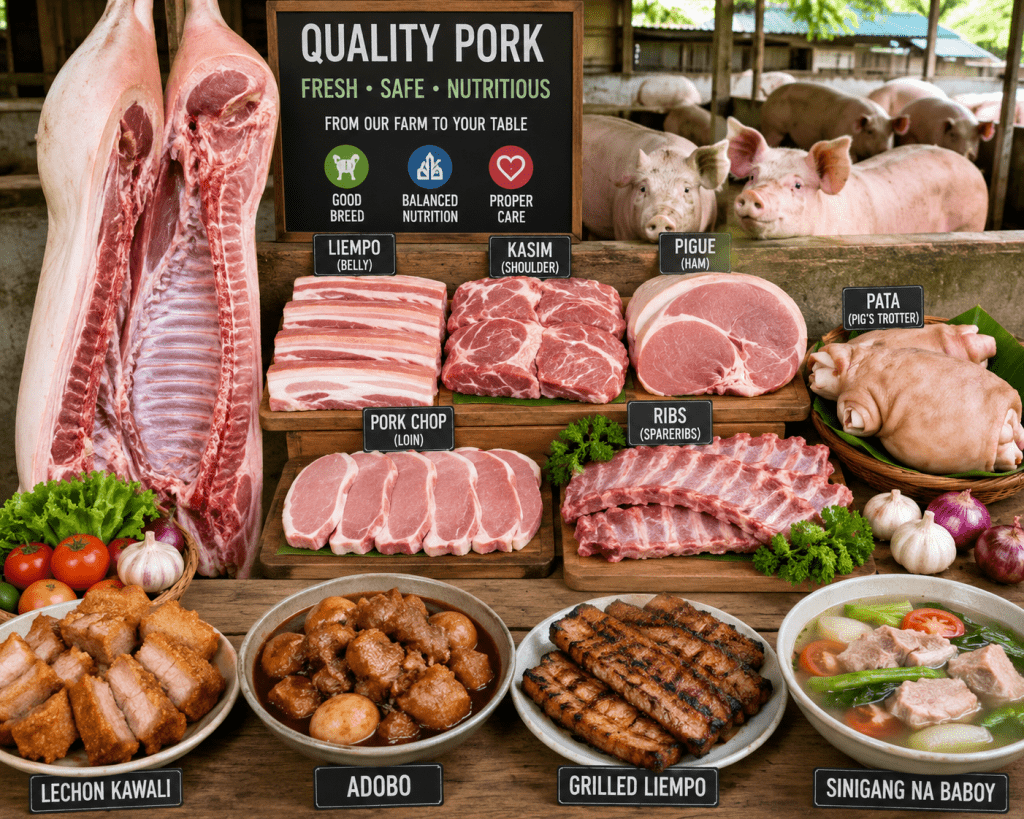
At the same time, restaurants, barbecue stalls, and home cooks continued to purchase large quantities of pork belly, ribs, and shoulder because these cuts produce exceptional flavor.
This apparent contradiction exists because fat has two very different forms.
External Fat
External fat is the layer beneath the skin, commonly called backfat. Excessive backfat reduces the proportion of saleable lean meat and may lower carcass value if it becomes too thick.
Intramuscular Fat
Intramuscular fat—better known as marbling—consists of tiny streaks of fat within the muscle.
Marbling contributes to:
- juiciness;
- tenderness;
- flavor;
- a richer eating experience.
Consumers often say a particular piece of pork is “masarap” without realizing that moderate marbling is one of the reasons.
Lean Pork Has Many Advantages
Modern commercial genetics have made it possible to produce pigs with higher lean-meat yields than ever before.
Lean carcasses provide:
- more saleable meat;
- better feed efficiency in many production systems;
- attractive pork chops and loin cuts;
- higher yields for processors.
Lean cuts such as pigue and loin are especially popular among health-conscious households and institutional buyers.
However, pursuing extreme leanness has disadvantages.
Very lean pork may lose moisture more quickly during cooking and can become dry if overcooked. Thin bellies may also be less desirable for grilling, roasting, and premium retail presentation.
Why Filipino Cuisine Still Values Fat
Filipino cooking is built around flavor, and many iconic dishes rely on the natural relationship between lean meat and fat.
Consider these examples:
- Lechon kawali depends on alternating layers of meat and fat to achieve a crisp exterior and juicy interior.
- Grilled liempo develops its distinctive aroma because fat melts slowly over hot charcoal.
- Humba and paksiw na pata become rich and tender as collagen and fat break down during long cooking.
- Pork barbecue made from shoulder remains moist because moderate fat protects the meat during grilling.
Remove all the fat from these dishes, and much of their character disappears.
The lesson is clear:
Fat is not the enemy. Excessive fat is.
The Ideal Philippine Carcass
Rather than aiming for the leanest pig or the fattest pig, most producers should aim for a balanced carcass.
A desirable carcass generally has:
- well-developed hams;
- a thick, meaty loin;
- a belly with balanced layers of lean and fat;
- moderate, not excessive, backfat;
- firm white fat;
- good muscling throughout the shoulder.
This combination satisfies the widest range of buyers—from wet markets and supermarkets to restaurants and processors.
Different Markets Want Different Pigs
One of the biggest mistakes a producer can make is assuming that every buyer values the same carcass.
A wet-market butcher may prefer a pig with attractive liempo and kasim because these cuts sell quickly to household customers.
A meat processor may focus on ham development and lean yield for producing tocino, ham, or embutido.
A lechon specialist may prioritize skin quality, body shape, and fat cover.
The best producers do not simply raise pigs—they raise pigs for a specific market.
Nutrition Shapes the Balance
Genetics determine a pig’s potential, but nutrition determines how much of that potential is realized.
Balanced feeding supports:
- efficient lean growth;
- proper muscle development;
- moderate fat deposition;
- firm carcass fat;
- improved carcass uniformity.
Poorly balanced diets can lead to either excessive fat or poor muscle development, reducing overall carcass value.
This is why commercial nutrition programs are designed to match the pig’s stage of growth rather than relying on a single ration from weaning to market.
The Role of Complete Nutrition
Every kilogram of feed contributes to the final product consumers see in the meat market.
High-quality feeding programs are designed not simply to increase weight, but to improve:
- growth efficiency;
- carcass quality;
- muscle development;
- consistency;
- overall farm profitability.
Modern complete feeds, such as those developed by Purina® by Cargill, are formulated to help pigs express their genetic potential while supporting balanced carcass development. Good nutrition works hand in hand with genetics, health, and management—it cannot replace them, but it allows them to perform at their best.
Key Takeaways
Before deciding whether to produce “fat” or “lean” pigs, remember these principles:
- Consumers buy eating quality, not just kilograms.
- Moderate marbling improves flavor and tenderness.
- Excessive backfat reduces carcass value.
- Balanced carcasses satisfy the widest range of buyers.
- Nutrition and genetics work together to produce premium pork.
- Successful farmers produce pigs for their target market—not simply the heaviest pigs possible.
Continue Reading
In the next article of the UBTAC Pork Excellence Series:
The Best Market Weight: Should You Sell Pigs at 80 kg, 100 kg or 120 kg?
We’ll examine how liveweight affects carcass composition, feed efficiency, consumer preference, and profitability—and why the heaviest pig is not always the most profitable one.
I recommend adding a “Related Articles” section at the end of each post with thumbnail links to the previous and next articles. This will improve reader navigation and strengthen your internal SEO structure.